Introduction: The Roadblock to EV Charging
EV adoption is growing faster than the grid was ever designed to handle. With 90% of EV owners looking to charge at home, the logical next step for the average homeowner, condo resident, or business, is installing charging infrastructure.
But here's the roadblock: most existing electrical systems were never sized for EVs. A typical Canadian home with a 100A or 125A service was built to handle lighting, small appliances, and maybe a clothes dryer and electric stove. Add in a modern EV charger that can draw 32A to 48A continuously, and suddenly the system is at its limit. In condos, the issue multiplies: dozens of units sharing feeders and transformers that were sized for yesterday's demand, not today's electrification push.
Traditionally, the industry's answer is simple but blunt: service upgrades. Replace the panel, upgrade the feeder cables, install a bigger transformer, and increase utility service capacity. On paper, it works. In practice, it's often catastrophic for budgets and timelines.
This guide explores the technical and financial pitfalls of upgrades, explains why they're not always necessary, and shows how adaptive power management can enable safe, code-compliant charging without ripping out infrastructure.
The Upgrade Problem: Costly and Slow
To understand why upgrades are such a sticking point, it helps to look at what they actually involve.
Most Canadian single-family homes run on 100A or 125A service. An EV charger at 40A continuous load eats up a huge share of that capacity. If a stove, dryer, or heat pump kicks on while the car is charging, you can exceed the panel rating. Utilities and inspectors treat this as a code violation risk.
The standard prescription: upgrade to 200A service. That means new panel, new meter base, larger gauge conductors, and sometimes trenching or pole-to-house replacement. Costs can quickly exceed $10K to $30K.
In condos and townhouse complexes the problem compounds. Instead of one EV charger, there could be dozens, each drawing 32A or more. Feeders supplying the complex were not designed for this load profile. Utilities see the potential for simultaneous charging and assume worst-case demand.
The result is sweeping requirements, replacing feeders, transformers, and distribution equipment. Timelines stretch to years because utilities must design and schedule work, coordinate outages, and permit construction plus long lead times for items like new hydro transformers and switchboards.
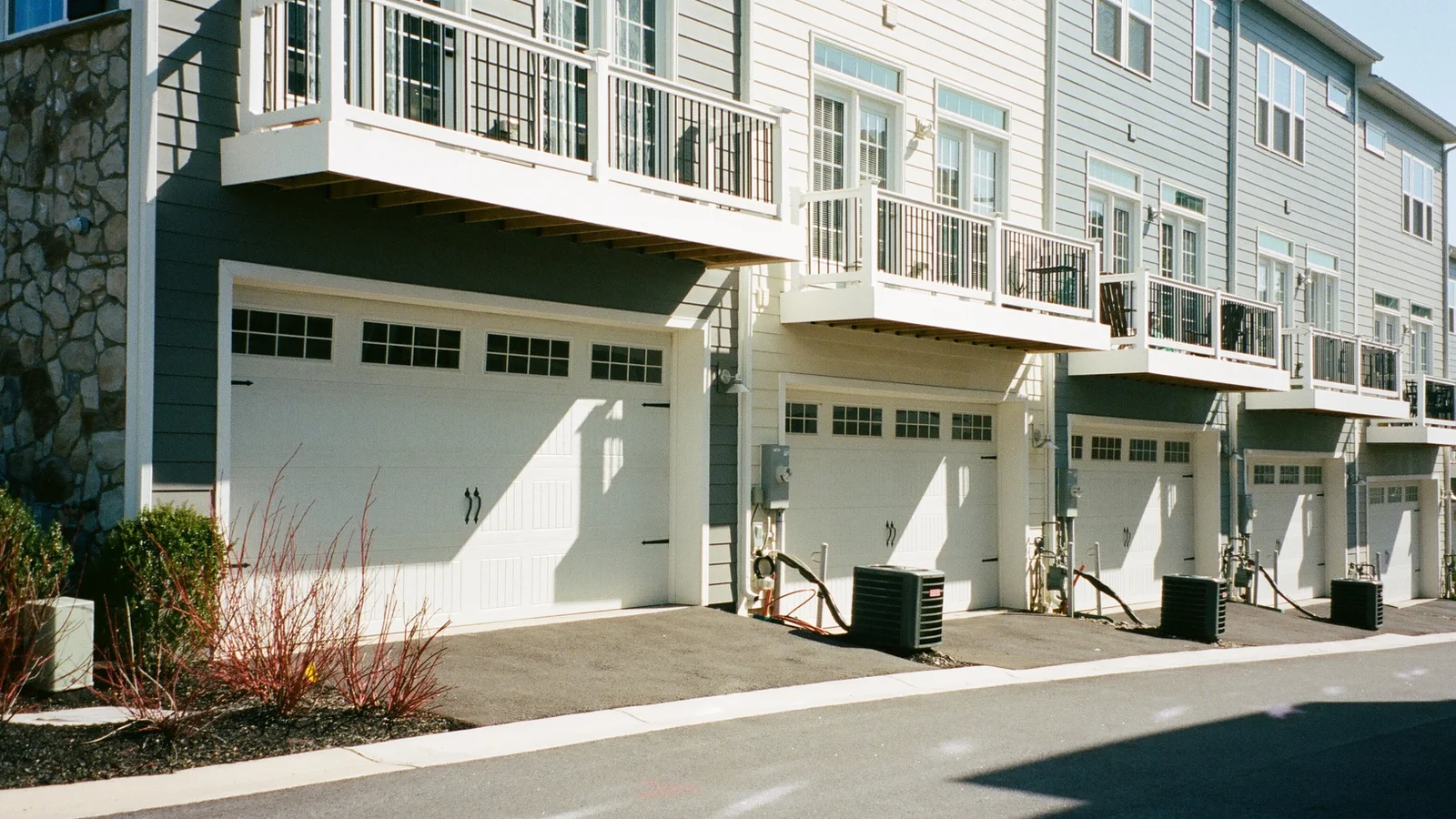
At one complex Variablegrid worked with, the utility determined the existing infrastructure couldn't support additional chargers. The official quote: $1.5 million for upgrades. The scope included replacing a large pad-mounted transformer and five feeder stations. This wasn't a minor job, it was essentially a rebuild of the property's electrical backbone. The project was given a multi-year timeline.
For the condo council, this was a non-starter. Most councils faced with numbers like this abandon the idea of EV charging entirely, leaving residents frustrated and adoption stalled. Fortunately, with adaptive power management from Variablegrid, the townhouse complex avoided the $1.5M upgrade entirely. Every resident who wanted home charging was able to get it, safely and affordably, without touching the transformer or feeders.
Electrical Upgrades: Not Necessary
The irony is that the utility's worst-case assumption that every EV charger will pull full load at the same time, indefinitely, almost never happens. Charging is flexible. Loads fluctuate. Households don't all cook, dry laundry, and charge cars at the same moment. The problem isn't lack of absolute capacity; it's lack of real-time load coordination.
This is where adaptive power management comes in. By monitoring total load with CTs (current transformers) and dynamically adjusting EV charger output, you can guarantee that the building never exceeds its rated capacity, without spending millions on oversized infrastructure.
The key idea: you don't need more power, you just need to use it more intelligently.
How Installations Work: Without Service Upgrades
Whether it's a single-family home, a condo, or a business, the process looks similar:
- Load assessment — Check the building's existing panel or feeder capacity.
- Install monitoring (CTs) — Small current transformers are clipped onto incoming power lines to measure total usage in real time.
- Connect chargers to a controller — Communication happens via Wi-Fi, Ethernet, or powerline communication.
- Configure load limits — Software sets thresholds so charging ramps down when building load gets high.
- Commission chargers — Confirm the system is set up correctly.
- Deliver the project — No panel or service upgrade required.
This process takes under 30 minutes for single-family homes, not months or years and costs a fraction of a utility-led upgrade.
Why This Matters for Condo Boards
Condo boards are often caught between rising EV demand from residents and scary quotes from utilities. Adaptive power management changes the conversation:
- Avoid million-dollar infrastructure projects.
- Provide fair access to all residents, not just early adopters.
- Future-proof the building as EV adoption accelerates.
- Move ahead now instead of waiting years for utility work.
For the townhouse complex that faced the $1.5M quote, adaptive power management made the difference. Instead of stalling out, chargers were installed without touching the transformer or feeders. The project became affordable and achievable.
Why This Matters for Homeowners
For single-family homes, panel upgrades are a major hidden cost. Many houses built in the past few decades have 100A or 125A panels, which often aren't enough for a full-capacity charger plus the rest of the household load.
Adaptive power management means:
- No service upgrades needed.
- Faster installation, days or weeks, not months.
- Future-proofing, add another EV or even a heat pump without worrying about panel limits.
- Instead of saying "no" to a charger, homeowners can move forward with confidence.
Why This Matters for Electricians
For electricians, service upgrades are often project-killers. When a client sees the cost, they walk away. Adaptive power management flips that script:
- More approvals, fewer lost bids due to upgrade costs.
- Faster installs, no waiting for utility approvals.
- Scalable work, start with a few chargers and expand later without redoing the infrastructure.
- Differentiation, win jobs by offering solutions others don't.
For electricians, it's not just about getting more work, it's about future-proofing your business as EV demand grows.
Conclusion: Don't Let Service Upgrades Stop You
The electrification of transportation is inevitable. What isn't inevitable is spending unnecessary money and time on oversized infrastructure upgrades. For homeowners, condos, and businesses, the path forward doesn't have to mean new transformers, bigger feeders, or panel replacements.
By embracing adaptive power management, you can make the most of the capacity you already have. Instead of waiting years for utilities to finish upgrade projects, charging can be installed today. Instead of abandoning projects because of sticker shock, councils and homeowners can move ahead with affordable solutions that scale as demand grows. And instead of losing bids, electricians can deliver smarter, faster, and more cost-effective installations.
Electrification isn't being blocked by cars, or even by charger availability. It's being blocked by the assumption that the only safe path forward is bigger infrastructure. That assumption is outdated.
Adaptive power management offers a different approach: instead of oversizing everything to handle the worst possible moment, it uses real-time monitoring and control to stay within safe operating limits. CTs installed in panels or feeders measure current flow, controllers communicate with chargers, and output is adjusted automatically to prevent overload. The building stays protected, residents get the charging access they need, and electricians can deliver installations without involving utilities in massive redesigns.
An energy-abundant future doesn't hinge on bigger distribution, bigger transformers and bigger panels. It hinges on smarter systems that unlock the potential of the infrastructure we already have. And that future is already here.